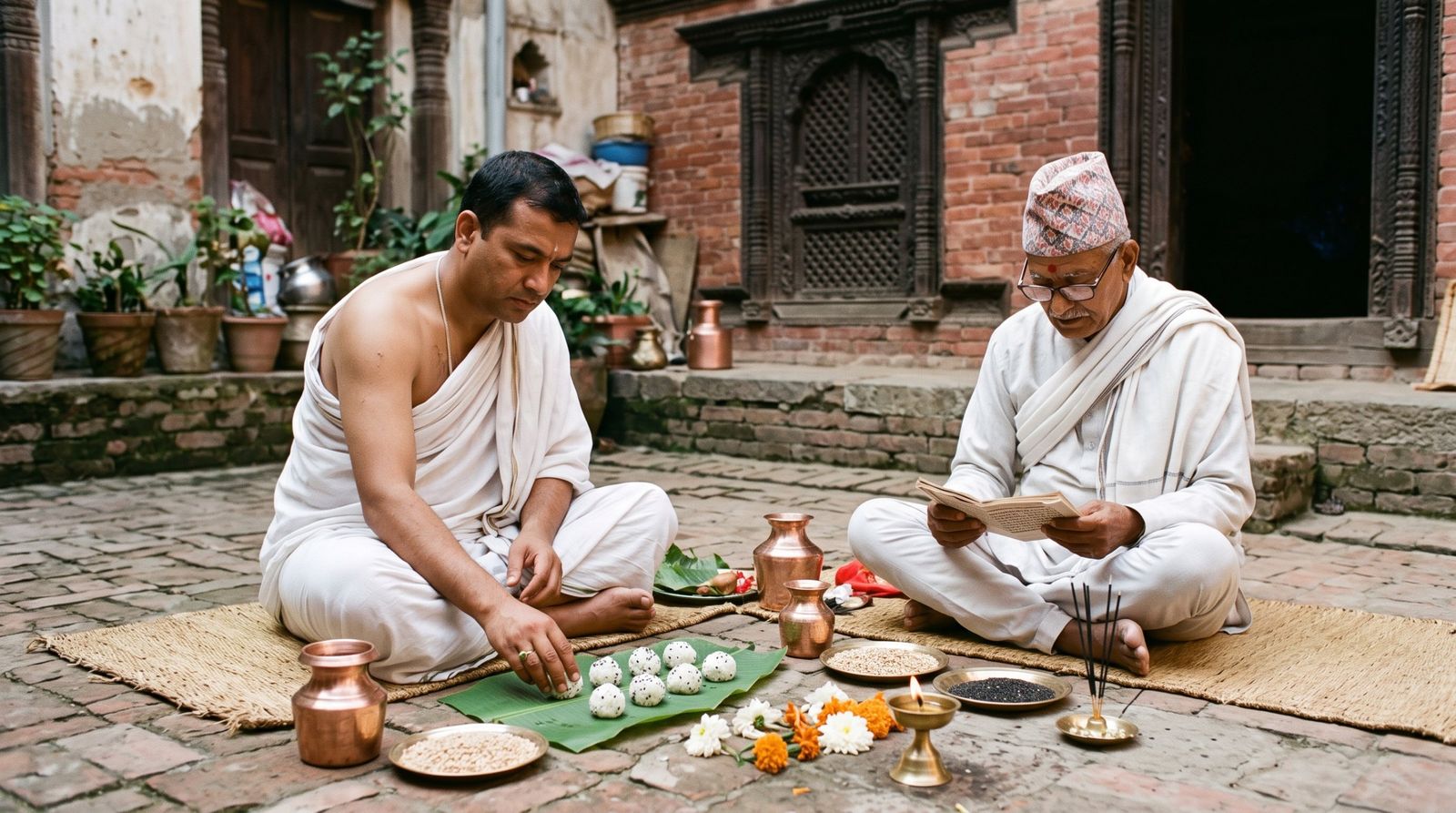

What is Sorha Shraddha?
Sorha Shraddha is a sixteen-day period of rites performed with devotion in memory of departed ancestors. It is also called Pitri Paksha, the fortnight of the ancestors.
It begins on Bhadra Shukla Purnima and ends on Ashwin Krishna Aunsi. The full moon plus the fifteen tithis of the waning fortnight make sixteen days, which is why it is called “sorha” (sixteen) shraddha. The word shraddha comes from shraddha, faith: an offering made to the ancestors with faith.
Why it is observed
Sanatan Dharma speaks of three debts every person carries: to the gods (dev rin), to the sages (rishi rin) and to the ancestors (pitri rin). The debt to those who gave us birth, values and identity is believed to be repaid through shraddha and tarpan.
During these days the ancestors are believed to come from Pitrilok toward the earth and accept the food and water their descendants offer.
Ancestors who are satisfied are believed to bless the family with happiness, peace, health and the continuation of the lineage.
Pinda and tarpan are said to help the departed soul find peace and move on.
Many believe that when shraddha is neglected the ancestors are left unsatisfied and obstacles arise in the family, so shraddha is also seen as a remedy for pitri dosh.
The story of Karna
After his death, Karna, the great giver of the Mahabharata, reached heaven. There he was given gold, silver and jewels instead of food. When he asked why, Indra replied: “All your life you gave away gold and wealth, but you never offered food or water to your ancestors.”
Karna said he had never even known who his ancestors were. He was then allowed to return to earth for sixteen days. In those days he offered tarpan and pinda to his ancestors, and it is believed those sixteen days became Pitri Paksha, or Sorha Shraddha.
However generous our giving, we must never forget our duty to those who came before us.
Shraddha by tithi
Each ancestor's shraddha is performed on the tithi of the fortnight that matches the tithi of their death. A few tithis are special:
| Tithi | Whose shraddha |
|---|---|
| Purnima | Ancestors who passed away on a purnima tithi |
| Matri Navami (Ashwin Krishna Navami) | Mothers and ancestors on the mother's side |
| Chaturdashi | Those who died in accidents or untimely deaths |
| Sarvapitri Aunsi (Ashwin Krishna Aunsi) | All ancestors, especially those whose tithi is not known |
If the tithi of death is unknown, or the shraddha cannot be done on the right day, it can be performed on Sarvapitri Aunsi.
How shraddha is performed
- Purity: After bathing in the morning, usually the eldest son or another family member performs the shraddha with the help of a purohit.
- Tarpan: Holding kush grass, sesame, barley and water, the family offers water while speaking the ancestor's name and gotra.
- Pinda daan: Rice balls made with sesame, barley and ghee are offered to the ancestors.
- Setting aside portions: Portions of kheer and food are set aside for the cow, the dog and the crow. The crow is seen as a messenger of the ancestors, so when it eats its share the ancestors are believed to be satisfied.
- Feeding and giving: Brahmins are fed and given dakshina, grain and clothing.
During Pitri Paksha many families keep to simple sattvic food and avoid starting new auspicious undertakings.
Its cultural and social meaning
- It gives the younger generation a chance to learn about their lineage, gotra and ancestors.
- Families gather in one place to remember their elders, which strengthens the bonds between them.
- Feeding others and giving gifts nurtures generosity in the community.
- Ghatasthapana and Dashain follow right after Pitri Paksha, so the ancestors are remembered first, and only then is the goddess worshipped.
In essence, Sorha Shraddha is a festival of gratitude: remembering with reverence those who gave us life.
Would you like a purohit to perform your ancestors' shraddha in your name?
Book a pujaसोह्र श्राद्ध के हो?
सोह्र श्राद्ध भनेको दिवंगत पितृहरूको सम्झनामा श्रद्धापूर्वक गरिने सोह्र दिनको श्राद्ध पर्व हो। यसलाई पितृपक्ष पनि भनिन्छ।
यो पर्व भाद्र शुक्ल पूर्णिमादेखि सुरु भएर आश्विन कृष्ण औंसीसम्म चल्छ। पूर्णिमा र कृष्ण पक्षका पन्ध्र तिथि गरी सोह्र दिन हुने भएकाले यसलाई "सोह्र श्राद्ध" भनिन्छ। "श्राद्ध" शब्द "श्रद्धा" बाट बनेको हो: श्रद्धासाथ पितृलाई अर्पण गरिने कर्म नै श्राद्ध हो।
सोह्र श्राद्ध किन गरिन्छ?
सनातन धर्ममा मानिसमाथि तीन ऋण मानिन्छ: देव ऋण, ऋषि ऋण र पितृ ऋण। हामीलाई जन्म, संस्कार र पहिचान दिने पुर्खाप्रतिको ऋण श्राद्ध र तर्पणबाट चुकाइन्छ भन्ने मान्यता छ।
यो अवधिमा पितृहरू पितृलोकबाट पृथ्वीतिर आउँछन् र आफ्ना सन्तानले दिएको अन्न र जल ग्रहण गर्छन् भन्ने धार्मिक विश्वास छ।
तृप्त भएका पितृले परिवारलाई सुख, शान्ति, स्वास्थ्य र वंश वृद्धिको आशीर्वाद दिन्छन् भन्ने मान्यता छ।
पिण्ड र तर्पणले दिवंगत आत्माको सद्गति हुन्छ भनिन्छ।
श्राद्ध नगर्दा पितृ असन्तुष्ट हुन्छन् र परिवारमा बाधा आउँछ भन्ने विश्वास पनि छ। त्यसैले यसलाई पितृ दोष हटाउने उपायका रूपमा पनि लिइन्छ।
पौराणिक कथा: दानवीर कर्ण
मृत्युपछि कर्ण स्वर्ग पुगे। त्यहाँ उनलाई खानाको सट्टा सुन, चाँदी र रत्न दिइयो। कारण सोध्दा इन्द्रले भने, "तिमीले जीवनभर सुन र धन दान गर्यौ, तर आफ्ना पितृलाई कहिल्यै अन्न र जल अर्पण गरेनौ।"
कर्णले भने कि उनलाई आफ्ना पितृबारे थाहै थिएन। त्यसपछि उनलाई सोह्र दिनका लागि पृथ्वीमा फर्कन अनुमति दिइयो। ती दिनमा कर्णले पितृलाई तर्पण र पिण्डदान गरे। त्यही सोह्र दिनलाई पितृपक्ष वा सोह्र श्राद्ध भनिन थालियो भन्ने विश्वास छ।
धन दान जति ठूलो भए पनि पुर्खाप्रतिको कर्तव्य बिर्सनु हुँदैन।
तिथि अनुसार श्राद्ध
सोह्र श्राद्धमा पितृको श्राद्ध उनको मृत्यु भएको तिथिमै गरिन्छ। केही तिथि विशेष मानिन्छन्:
| तिथि | कसको श्राद्ध |
|---|---|
| पूर्णिमा | पूर्णिमा तिथिमा दिवंगत भएका पितृ |
| मातृ नवमी (आश्विन कृष्ण नवमी) | दिवंगत आमा तथा मातृ पक्षका पितृ |
| चतुर्दशी | दुर्घटना वा अकाल मृत्यु भएका पितृ |
| सर्वपितृ औंसी (आश्विन कृष्ण औंसी) | सबै पितृ, विशेषगरी मृत्यु तिथि थाहा नभएका पितृ |
मृत्यु तिथि थाहा नभए वा तोकिएको दिन श्राद्ध गर्न नसके सर्वपितृ औंसीमा गर्न सकिन्छ।
श्राद्ध कसरी गरिन्छ?
- शुद्धता: बिहान नुहाइधुवाइ गरी चोखो भएर, सामान्यतया घरको जेठो छोरा वा परिवारका सदस्यले पुरोहितको सहयोगमा श्राद्ध गर्छन्।
- तर्पण: कुश, तिल, जौ र जल लिएर पितृको नाम र गोत्र उच्चारण गर्दै जल अर्पण गरिन्छ।
- पिण्डदान: चामल, तिल, जौ र घिउ मिसाएर बनाएको पिण्ड पितृलाई अर्पण गरिन्छ।
- भाग छुट्याउने: खीर र भोजनको भाग गाई, कुकुर र कागका लागि छुट्याइन्छ। काग पितृको सन्देशवाहक मानिन्छ, त्यसैले कागले भाग खाए पितृ तृप्त भए भन्ने विश्वास छ।
- ब्राह्मण भोजन र दान: ब्राह्मणलाई भोजन गराई दक्षिणा, अन्न र वस्त्र दान गरिन्छ।
पितृपक्षमा धेरै परिवारले सात्त्विक भोजन गर्छन् र नयाँ शुभ काम सुरु गर्दैनन्।
सांस्कृतिक र सामाजिक महत्त्व
- यसले नयाँ पुस्तालाई आफ्नो वंश, गोत्र र पुर्खाबारे जान्ने अवसर दिन्छ।
- परिवारका सदस्य एकै ठाउँ भेला भई पुर्खाको सम्झना गर्छन्, जसले पारिवारिक सम्बन्ध बलियो बनाउँछ।
- दान र भोजनले समाजमा परोपकार र सहयोगको भावना बढाउँछ।
- पितृपक्षपछि घटस्थापनासँगै दशैं सुरु हुन्छ। त्यसैले पहिले पितृलाई सम्झेर मात्र देवीको आराधना गर्ने क्रम बस्छ।
सारमा, सोह्र श्राद्ध कृतज्ञताको पर्व हो। जसले हामीलाई जीवन दिए, उनीहरूलाई श्रद्धापूर्वक सम्झनु नै यसको मूल भावना हो।
पितृको श्राद्ध पुरोहितद्वारा तपाईंको नाममा गराउन चाहनुहुन्छ?
Book a puja